
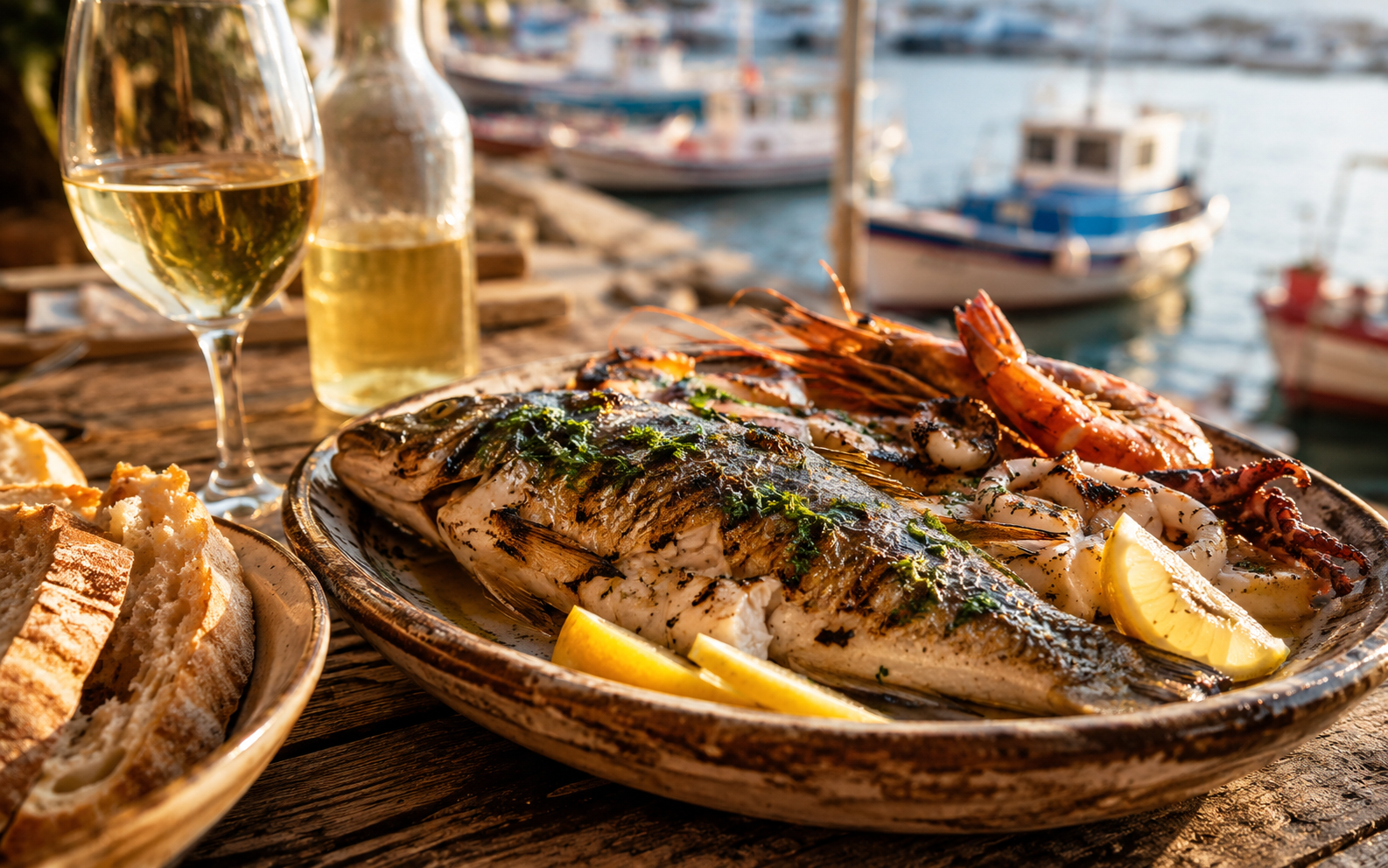
The current fashion for "boat-to-plate" cooking is sold as a recent innovation. It is not. Fishing villages have been cooking the catch of the day, on the day, for as long as fishing villages have existed. The only thing that has changed is that someone figured out you could put it on a menu and charge more.
The original logic
For most of human history, coastal cooking was determined by what came off the boats that morning. There was no choice in the matter. Refrigeration was poor or non-existent. Fish that did not sell quickly was salted, smoked, or thrown back into the sea. The menu in any harbourside taverna was a function of the tide.
This produced a style of cooking that prized freshness above almost everything else. Olive oil, lemon, salt, parsley. Whole fish grilled or baked simply. No need to mask anything because nothing needed masking.
The same logic produced very different cuisines in different places. Greek psarotaverna cooking. Portuguese cataplana. Sicilian seafood antipasti. Japanese izakaya dishes. The technique was different, the underlying principle the same.
What modern restaurants borrowed
The contemporary "Mediterranean" or "Nordic" coastal restaurant — the kind that wins awards and gets covered in magazines — has built its identity on borrowing the surface aesthetics of the fishing village while losing the underlying necessity. The blackboard menu. The single fish of the day. The pretence that nothing was planned.
Some of these restaurants are wonderful. Some are theatre. The good ones understand that "boat to plate" is not a marketing claim — it is a logistical constraint that produces a specific kind of cooking, and the cooking only works if the constraint is real.
How to tell the difference
Genuine coastal cooking has a few tells. The menu is short. The fish is mostly whole, not filleted. There are species you may not recognise because they are what came in this morning, not what is trendy.
The cooking technique is restrained. Almost everything is grilled, baked, or steamed. Heavy sauces are uncommon because they would mask the fish. The accompaniments are starchy and unfussy — boiled potatoes, rice, a salad.
If a coastal restaurant has a 30-page menu with 12 different fish dishes and a sushi section, it is not cooking what came off the boat that morning. It is cooking what came in a freezer truck from a wholesale market two days ago.
The villages that still do it
Across the Mediterranean, the working fishing village restaurant survives in smaller, less famous towns. Skip the tourist hubs. Go to places where there are still working boats, where the harbour smells of fish and diesel, and where the restaurant is run by the family of the fisherman.
The same is true in Cornwall, in Galicia, in parts of southern Italy, in coastal Croatia, in Japanese fishing ports. The institution exists. It just doesn't advertise.
The best meal you will eat on the coast is almost never at the most-reviewed restaurant. It is at the small one with no website where you sit at a plastic table and the bill comes scribbled on the back of a paper placemat.