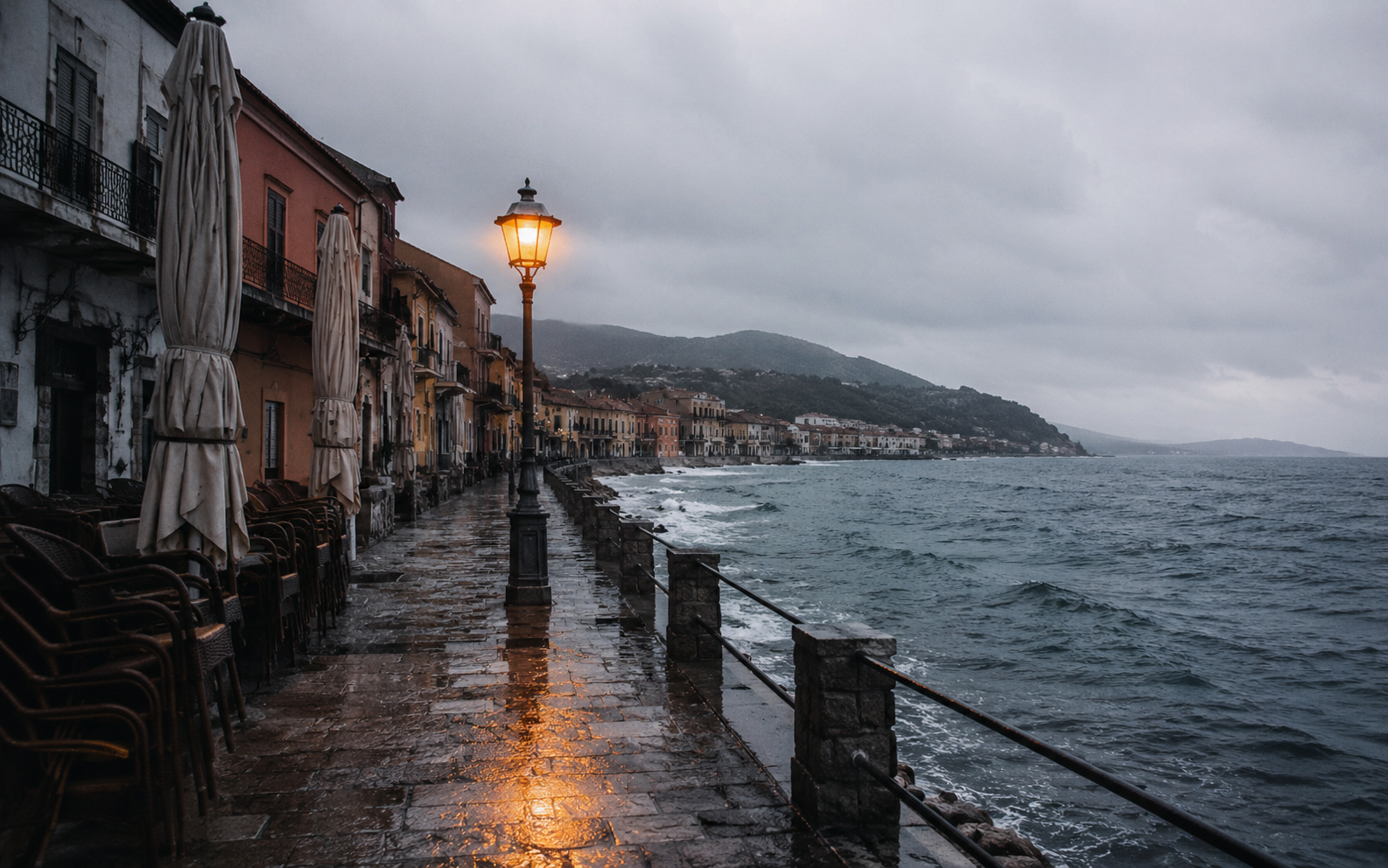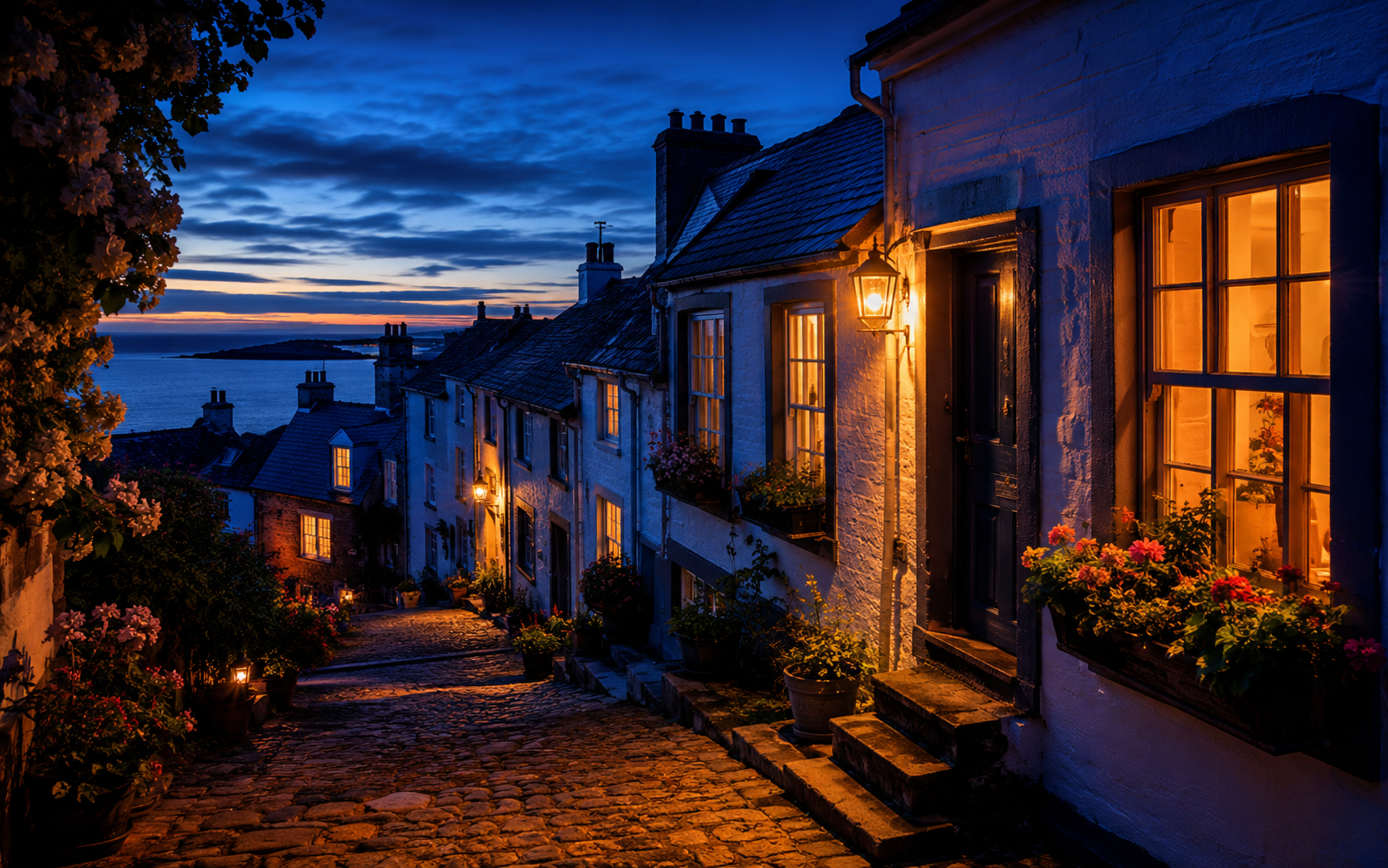
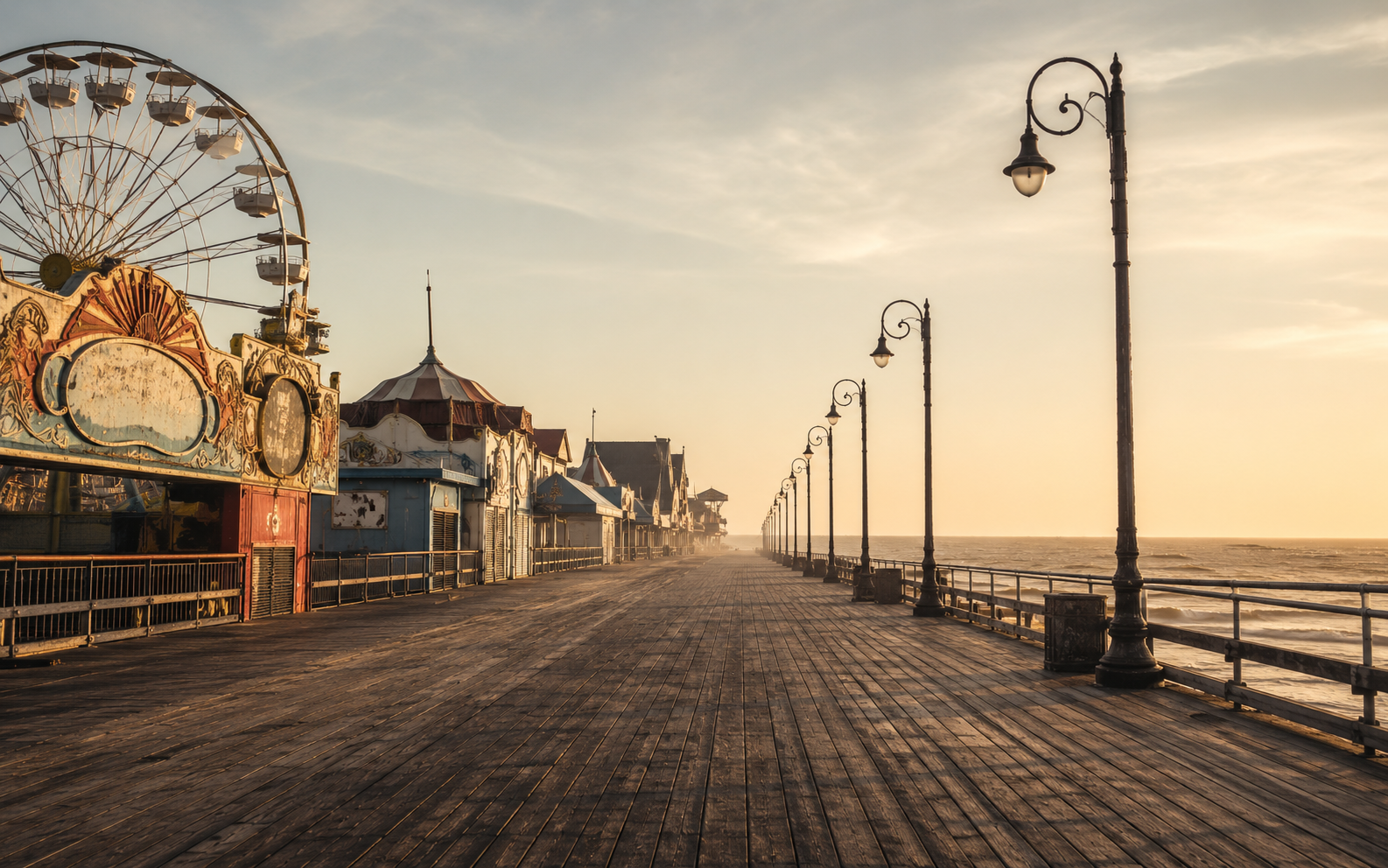
For most of the twentieth century, the boardwalk was the central social institution of the seaside resort. Atlantic City. Brighton. Coney Island. Blackpool. The wooden promenade running along the beach was where you went to be seen, to meet people, to eat candy floss, to ride a Ferris wheel, to fall in love.
Then, in the second half of the century, most boardwalks went into decline. The reasons were structural: cheap flights, package holidays to warmer places, declining domestic tourism, and the slow rot of wooden infrastructure that nobody wanted to fund.
The original purpose
The boardwalk emerged in the 1870s, when seaside resorts were trying to solve a simple problem: the sand kept ending up in the hotels. Wealthy Victorian visitors wore long dresses and good shoes and they wanted to walk by the sea without ruining either. A raised wooden walkway along the beachfront was the solution.
Once built, the boardwalk became more than a footpath. It was an architectural device that created a stage. People walked along it slowly, to be observed by others walking the other way. Pavilions, kiosks, and amusements lined it. By the early twentieth century, the boardwalk was the most economically valuable strip of land in any resort town.
What killed them
Mass aviation, mostly. Once Brits could fly to Spain for the same cost as a week in Margate, the domestic seaside economy collapsed in waves through the 1970s and 80s. American resorts followed a parallel decline.
Wood rots. Salt corrodes everything. Maintaining a boardwalk costs serious money, and as the history of the boardwalk as urban infrastructure documents, councils stopped paying for upkeep as visitor numbers fell. Boards splintered. Railings rusted. Pavilions closed. Many famous boardwalks disappeared entirely — torn out and replaced with concrete promenades that were cheaper to maintain but had none of the atmosphere.
The quiet revival
Something has shifted in the last decade. Several coastal towns have invested seriously in restoring or rebuilding their boardwalks — Hastings, parts of the Jersey Shore, several stretches of the Pacific Northwest. The motivation is partly economic (tourism strategy), partly cultural (heritage preservation), and partly practical (climate-adaptive coastal infrastructure).
The new boardwalks are not always literal recreations. Some use modern composite materials that look like wood but resist saltwater and don't splinter. Others integrate with cycle paths and flood defences. But the social function is the same: a space designed for slow walking, for looking at the sea, for chance encounters.
Why they still work
The boardwalk is one of the few pieces of urban infrastructure designed entirely around the experience of walking and looking. It has no other purpose. There is nowhere you are going on a boardwalk. You are simply there, in the smell of fried food and saltwater, watching other people watching the sea.
In an age when most public spaces are organised around throughput — get cars through, get people across, get pedestrians from A to B — the boardwalk insists on a different principle. Slow down. Look out. There is no destination.
That, more than the candy floss, is what we lost when we lost them. And that is what is coming back.